
What’s hiding in your idio?
October 22, 2026 | 10AM ET
A 20-minute presentation by Leon Serfaty (Axioma Product Specialist, SimCorp), followed by a discussion with Andrew Greenby (Chief Risk Officer & Chief Data Scientist, Ripple Effect Asset Management).
Summary
The AI trade has reshaped correlation structure across several industries, particularly semiconductors, Tech Hardware & Storage, Power Infrastructure, and even REITs. Everyone knows these names move together, but most factor risk models still treat their residual returns as independent noise. This presentation asks a simple question: if the AI trade is real and systematic, why can’t your risk model see it?
The answer points to a structural limitation in how fundamental factor models handle idiosyncratic risk. So how can you address this?
A recent piece of research from the Axioma team showed how the spread between fundamental and statistical model forecasts can detect hidden systematic risk. Using an AI-themed portfolio, they found that a statistical model forecast materially higher risk than its fundamental counterpart, and that it is mainly due to a persistent statistical factor that aligns on an AI industry axis.
But the AI story is a specific instance of a general phenomenon. Idiosyncratic risk can have structure and that structure can change over time. To define that structure, they look at an agglomerative hierarchical clustering on residual return correlations to find groups of stocks whose residuals move together. From Oil & Gas sub-industries to auto clusters to bank stratification, this approach finds mini-industries that defy modelling via traditional regression techniques due to thinness and can change risk forecasts in ways that matter for concentrated portfolios, thematic ETFs, and long/short strategies.
A fundamental model remains the foundation, but knowing when and why to complement it with these techniques, and what they reveal when you do, is what this session is about.
Speakers

Leon Serfaty
SimCorp
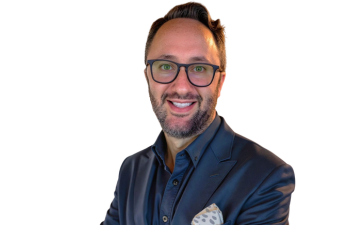
Andrew Greenby
The session will cover:

The evidence that the AI trade is real and systematic – and why most risk models still miss it
In Partnership with

Organized By:

LOCATION
Encore Boston Harbor
One Broadway
Everett
MA 02149

©2026 IQPC. All rights reserved.