
Will 2026 Be the Year We Achieve “Quantum Advantage”?
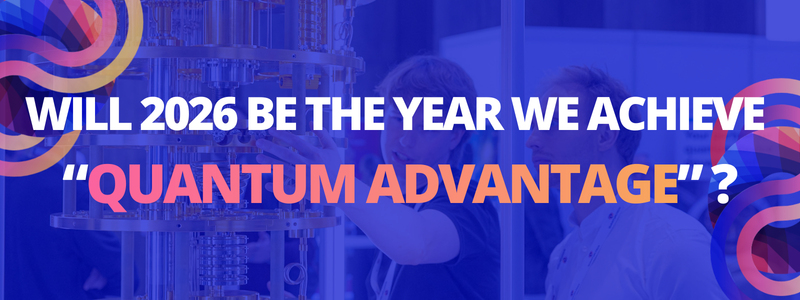
As quantum computing steadily transitions from laboratory curiosity to emerging technology platform, one question looms large: will 2026 be the year we achieve quantum advantage? In simple terms, quantum advantage refers to the point at which a quantum computer demonstrably outperforms the best classical computers on a meaningful task. While narrow demonstrations have already occurred, the debate at the start of this year centres on whether this advantage will become useful, repeatable, and economically relevant.
The answer, increasingly, appears to be yes—but with important caveats.
Over the past few years, quantum hardware has progressed in qubit count, coherence times, and error mitigation techniques. Major players such as IBM, Google, Quantinuum, and IonQ have shifted away from headline-grabbing qubit numbers toward deeper circuits and more realistic workloads. In the current context, many roadmaps converge on systems capable of running quantum circuits complex enough to challenge classical simulation, especially when paired with high-performance classical computing. Interestingly the concept of ‘heterogeneous computing’ is coming up in my research calls, more and more.
However, quantum advantage is unlikely to arrive as a single, dramatic moment. Instead, it will emerge unevenly across specific enterprise use cases, long before it becomes general-purpose.
Enterprise Use Cases: Where Advantage May First Matter
For enterprises, quantum advantage does not need to mean total dominance over classical computing—it simply needs to deliver measurable value. Early candidates are already taking shape.
Chemicals, materials, and pharmaceuticals are among the most promising sectors. Companies involved in catalyst design, battery chemistry, and drug discovery face exponential scaling challenges when simulating molecular systems. Even modest quantum speedups in electronic structure calculations could shorten R&D cycles or reduce reliance on costly physical experiments. Several pharmaceutical and chemical firms are already running hybrid quantum–classical workflows, with the expectation that in the near future hardware may begin to outperform classical heuristics on select molecular problems.
Optimization and logistics present another near-term opportunity. While classical algorithms remain highly effective, certain combinatorial problems—such as supply-chain routing, portfolio optimization, or energy grid balancing—may benefit from quantum-inspired or hybrid quantum approaches. Enterprises are less interested in theoretical speedups than in improvements such as faster convergence, better solution quality, or reduced energy consumption.
Finance and risk modeling may also see early impact. Quantum algorithms for Monte Carlo simulation and option pricing remain experimental, but even incremental improvements could be valuable in high-frequency or large-scale risk analysis environments.
Crucially, in all these cases, quantum advantage is likely to appear within tightly scoped problems, embedded inside existing classical workflows rather than replacing them.
Hear from some of our enterprise speakers at Quantum.Tech World.
The Other Side of the Coin: The Quantum Threat
While enterprises explore quantum advantage, they are simultaneously grappling with quantum risk, particularly in cybersecurity. Large-scale, fault-tolerant quantum computers capable of breaking today’s public-key cryptography (such as RSA and ECC) are still years away. However, the so-called “harvest now, decrypt later” threat is already real: adversaries can store encrypted data today and decrypt it once sufficiently powerful quantum machines exist.
This looming threat has pushed post-quantum cryptography (PQC) from academic concern to boardroom priority. Governments and standards bodies have responded quickly. The U.S. National Institute of Standards and Technology (NIST) has already selected several PQC algorithms for standardization, and many enterprises are beginning cryptographic inventories and migration planning. View
This year, PQC adoption is expected to accelerate sharply. Financial institutions, healthcare providers, cloud platforms, and critical infrastructure operators are likely to deploy hybrid cryptographic schemes that combine classical and post-quantum algorithms. In this sense, quantum computing may have its most immediate real-world impact not through advantage, but through forcing a global cryptographic transition.
A Transitional Year, Not an Endpoint
Seen in context, I expect the following 12 months is best understood as a transitional inflection point. Quantum advantage may be demonstrated convincingly for a handful of enterprise-relevant problems, under carefully defined conditions, using hybrid systems. These wins will matter—but they will not yet reshape the entire computing landscape.
At the same time, enterprises will increasingly treat quantum not as a speculative bet, but as a dual-track reality: a future source of computational advantage and a present-day security concern. Organizations that succeed will be those that experiment early, integrate quantum thoughtfully, and prepare defensively for its cryptographic implications.
So, will 2026 be the year of quantum advantage? Probably not in the sweeping, world-changing sense often implied. But it may well be the year when quantum computing crosses an important threshold—from promise to practical relevance—and when the quantum future begins to exert real pressure on today’s enterprise decisions.