
How AI Is Reshaping Quant Talent: An Interview with Max Soslove, Founder of Camber Morris
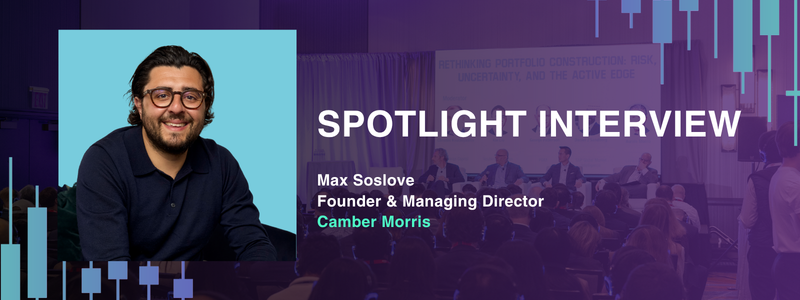
How AI Is Reshaping Quant Talent: An Interview with Max Soslove, Founder of Camber Morris
As AI becomes more deeply embedded in quantitative investing, it is changing the skills investment firms need, the way teams are structured and the competition for specialist talent.
We spoke with Max Soslove, Founder of Camber Morris, about how AI is influencing quantitative research teams, where demand for specialist talent is strongest, how buy-side hiring is evolving and what the quant talent market could look like over the next three to five years.
As AI becomes more embedded in quantitative research, how is it changing investment teams and the talent firms want?
"AI is not replacing quants; it is changing what firms expect from them. Teams increasingly need people who combine financial domain knowledge, quantitative research and strong engineering with an understanding of LLMs, machine learning and agentic tools. At Camber Morris, we are seeing particular demand for candidates who can apply AI to genuine investment problems rather than simply having theoretical knowledge of the technology."
Where is competition for specialist talent most intense across the buy side?
"Competition is particularly strong across systematic macro, rates and volatility, pricing analytics, quant engineering and AI/ML. The hardest candidates to find are those who combine deep asset-class expertise with the ability to research, code and deploy their work. Funds are also competing directly with technology companies and AI labs for many of these people."
The competition for talent is therefore extending beyond the traditional buy-side landscape, particularly for individuals who can combine specialist market knowledge with advanced technical capabilities.
What are the biggest shifts in how buy-side firms approach quant hiring?
"Hiring has become far more specific and vacancy-driven. Firms are less interested in broad profiles from impressive institutions and more focused on whether someone has solved the exact problem facing the team. We are also seeing greater demand for hybrid candidates: researchers who are strong engineers and developers who properly understand the investment context."
This growing emphasis on hybrid capabilities is bringing research, engineering and investment knowledge closer together within quantitative teams.
What do you expect from the quant talent market over the next three to five years?
"The boundaries between quant research, engineering and AI will continue to narrow. AI research engineers, agentic-system developers and specialists in unstructured data, model evaluation and research infrastructure will become increasingly important. However, the most valuable candidates will still be those who combine modern technology with market knowledge, research judgement and the ability to produce measurable investment value."
While AI is likely to play an increasingly important role across the investment process, Max Soslove believes quants themselves will remain central to how these technologies are applied:
Ultimately, quants will remain in the driving seat, with AI providing the engine that accelerates research, expands what is possible and turns ideas into investment outcomes.